
Yuvomi
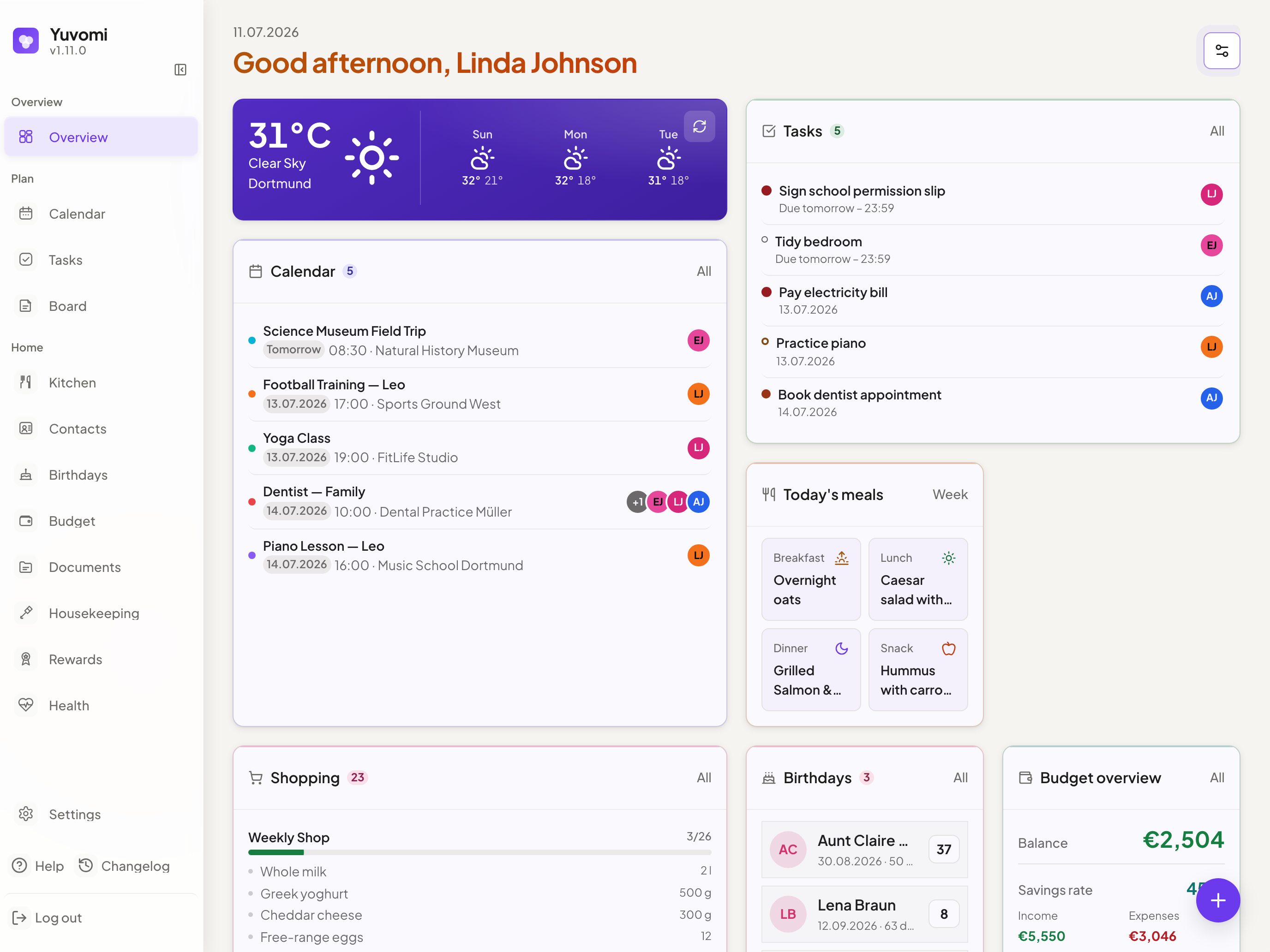
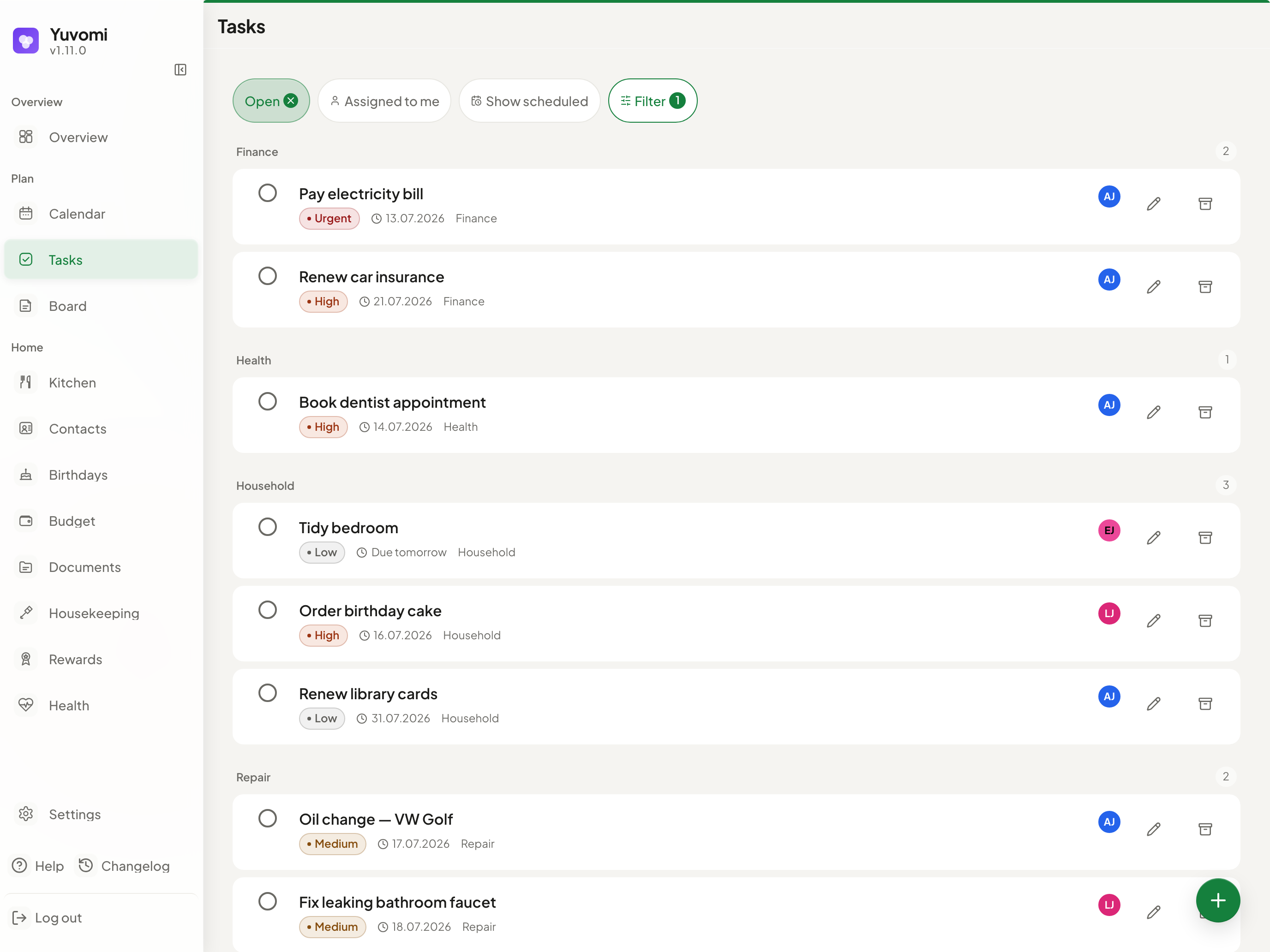
Self-hosted family planner for tasks, calendar, shopping, meals, and budget
Alternative to: cozi, familywall, skylight
About
Versions (402)
v2.57.3
2026-08-31Added
- The web installer validates the two remaining silent late-failures: timezone and SMTP port.
A typo like
Europe/Berlnused to fall back to UTC without a word - the backup cron and the household-timezone default then ran on the wrong clock; an SMTP port of70000surfaced weeks later at the first password reset. Both are now checked on the spot (the timezone against the browser’s IANA table), with the message bound to the offending field. The timezone message is new in all 24 installer languages. - The three home-network permissions explain themselves. Their per-toggle hints - naming Mealie, Tandoor and Nextcloud as the tools they exist for - had been translated into all 24 languages but were never rendered; they now sit beneath their checkboxes.
- The security-keys warning names the way out. Alongside “there is no reset” it now says the
finished
.envfile, including both keys, can be downloaded at the end of setup (all 24 languages) - so nobody transcribes two 64-character keys by hand out of fear. BACKUP_UPLOAD_LIMITis documented in.env.exampleand listed in the installer’s exception map. The server read it and the installation guide described it, but the example file never carried it - the one variable for which no decision had ever been recorded.
Changed
- Arming “Save & Start” is now visible, audible and double-click-proof. The two-click confirmation on both setup paths only swapped the button label: a literal double-click passed both stages in one gesture, and screen-reader users heard nothing at all. The armed state now carries an accent ring, is announced via a live region, and ignores clicks for a short cooldown after arming.
- One vocabulary per screen. German no longer mixes “Sicherungen” and “Backups” on the storage step or “Heimnetz” and “eigenes Netz” on the advanced step; the review page names the keys exactly like the key step (in English too); and untouched defaults read “not enabled” instead of posing as a decision (“disabled”).
Fixed
- A reload no longer discards the whole setup silently. Reloading or closing the tab midway through the wizard threw away every entered value, pasted OAuth secrets included - while, ironically, the language choice survived. The browser now asks first, from the first step up to (but not including) the finish screen.
- Switching the language on the review page translated the labels but not the values. “Neu erzeugt” and “Direkt / HTTP” stayed German under English labels - on the one screen whose job is to be read carefully before the irreversible click. The review now re-renders on every language switch.
- Validation errors are visible and bound to their field. The error banner lived at the end of
the step and could sit below the viewport: sighted users saw a red border with no reason, only
screen readers got the text. The banner now moves directly beneath the offending field and is
linked to it via
aria-describedby; raw server error details are wrapped in a translated message instead of appearing in English across all 24 languages. - The review page no longer scrolls the whole page sideways on phones. A realistic public address or WebDAV URL pushed the page to 534px at a 375px viewport (WCAG 1.4.10); the value column now shrinks and wraps. The redirect URIs in the calendar and storage steps wrap too instead of being clipped by their card - they are the one value copied character-for-character into a provider console.
- Smaller accessibility and theming debts of the installer. The language selector’s chevron was a hard-coded color below the 3:1 threshold in dark mode and now follows the theme token; the container log is keyboard-focusable and scrollable; the step counter is announced together with the step heading; the admin fields are marked required; dark-mode card shadows carry the app’s 1px edge ring - and the fallback-token parity guard now compares non-hex values, so this class of drift can no longer pass silently.
- Landing page copy tightened after the 2026-08-31 critique run: one verb family for installing, the hero’s solo promise carried through the feature copy, and the no-JS page no longer shows dead language and theme controls.