
Yuvomi
Self-hosted family planner for tasks, calendar, shopping, meals, and budget
Alternative to: cozi, familywall, skylight
v2.41.0
2026-08-25Fixed
-
Seven more places still asked the browser what time it is (#851). Found by widening the guard that was supposed to prevent exactly this. It matched
new Date(x).getHours()- the getters written straight onto the expression - and missed the far more commonconst now = new Date(); now.getFullYear(). Green and blind.What it had been letting through: the day the date picker rings as today; the running month in Budget and in Inventory; the “Today”/“Tomorrow” label on dashboard rows, which is handed real instants and so was converting them into the wrong zone; which medication windows count as still open today; and the date a new shared expense is pre-filled with. On a device in another zone every one of them could be a day out.
Two more surfaced while fixing those.
toDateString()is the same clock under another name - three places in the dashboard compared calendar days with it, and it sits outside the guard’s pattern because it uses no getter at all. And the sort key that decides whether the next Outlook item is an event or a task read the browser’s hour off a value that may or may not carry a zone.All of them now ask
nowFields()/todayKey(), or compare day keys. The guard reads bindings as well as expressions, and it stays a rule rather than an allowlist:getSeconds/getMillisecondsare excluded because they are the same in every zone, and onlyutils/timezone.js(which answers the question) andtheme-init.js(which runs before any zone is known, and decides something about the device anyway) are exempt. -
A task’s due label followed the browser’s clock, not the household’s (#851).
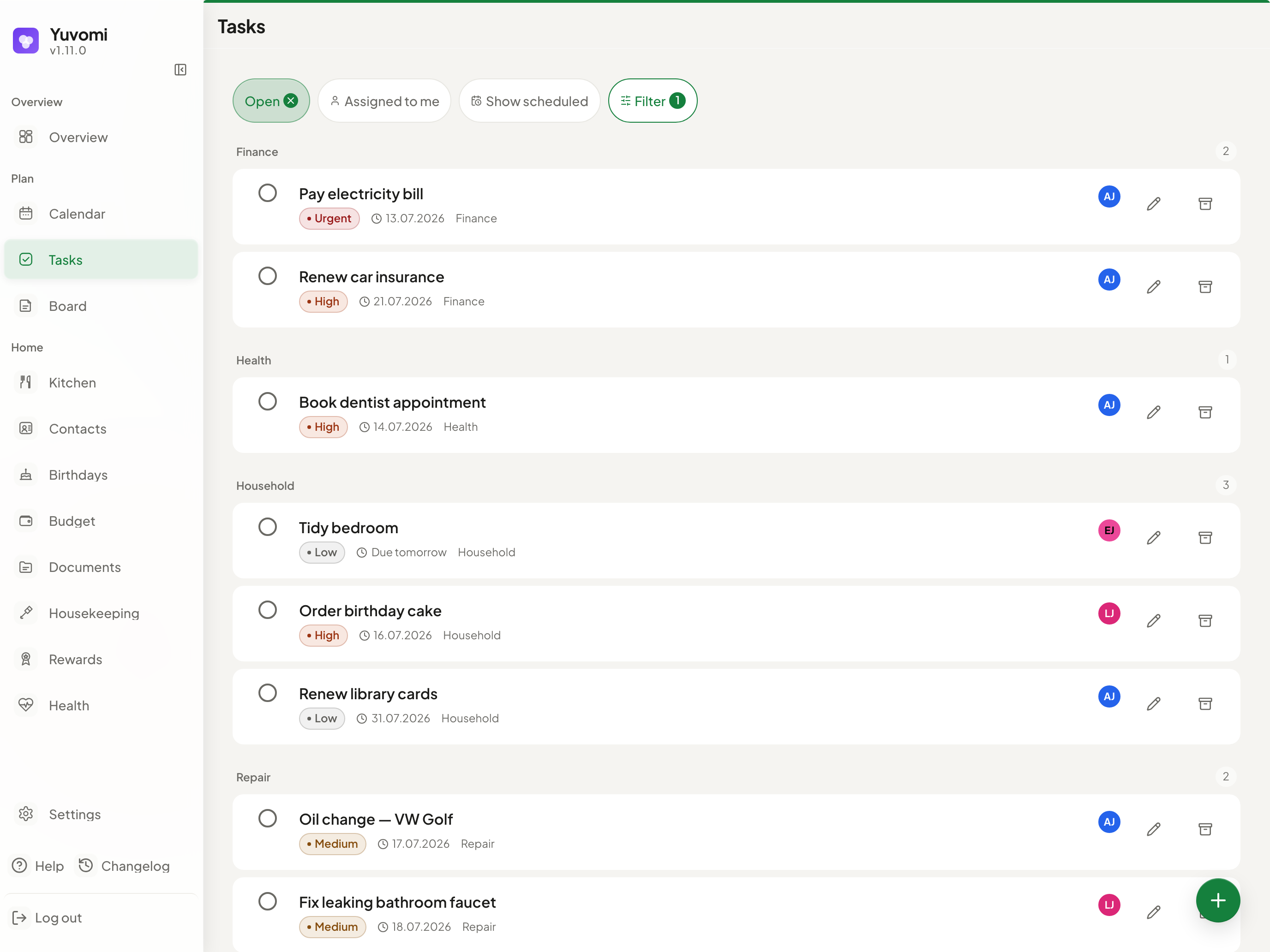
due_dateanddue_timeare zoneless wall-clock time: whoever typed “21:00” meant 21:00, whichever zone the household keeps. Both due labels - the one on the dashboard and the one in the Tasks module - ran that throughnew Date(...), which turns it into an instant in the browser’s zone; the formatters then converted that instant into the display zone. With the household on Honolulu and the browser in Berlin, a task entered for 21:00 read 9:00.The same clock decided “today” and “tomorrow”. In the Tasks module that put two clocks in one view: the grouping has followed
todayKey()since #829, so a task could sit under Tomorrow and be labelled Due today in the same list.Both now read the wall-clock stamp as what it is and ask the display zone what day it is. This was the seventh clock; #829 part 3 unified six.
-
The weather forecast was off by a day (#851). The server already keeps the running day out of
forecastso it is not shown twice - but the display kept labellingforecast[0]“Today” regardless. What stood there was tomorrow, so the row read as though a day were missing, and every column after it named the wrong weekday. Both surfaces carried the same copied line: the card on a phone and the wall-tablet view.A forecast day is now named from its own date, never from its position. The reference is the calendar day at the weather location, which the payload states explicitly - neither the browser’s zone nor the household zone can answer it, because a household may well watch the weather somewhere else. Where that reference is missing, the day keeps its weekday: no label at all beats a wrong one.
The response cache now expires at the weather location’s midnight as well as after its usual 30 minutes. Cached in the last half hour of a day, it would otherwise still be served after midnight, with
todaynaming yesterday.The legacy OpenWeatherMap branch bundled its three-hour steps into UTC days. That only held near the prime meridian: far west of it the running day was dropped by the wrong key in the evening and the forecast began at the day after tomorrow, far east of it a single UTC day fell across two local days and blended their readings into a high and low that existed on neither. The buckets are local days now, the symbol comes from whichever step is closest to local noon, and only days after today enter the row.
Added
-
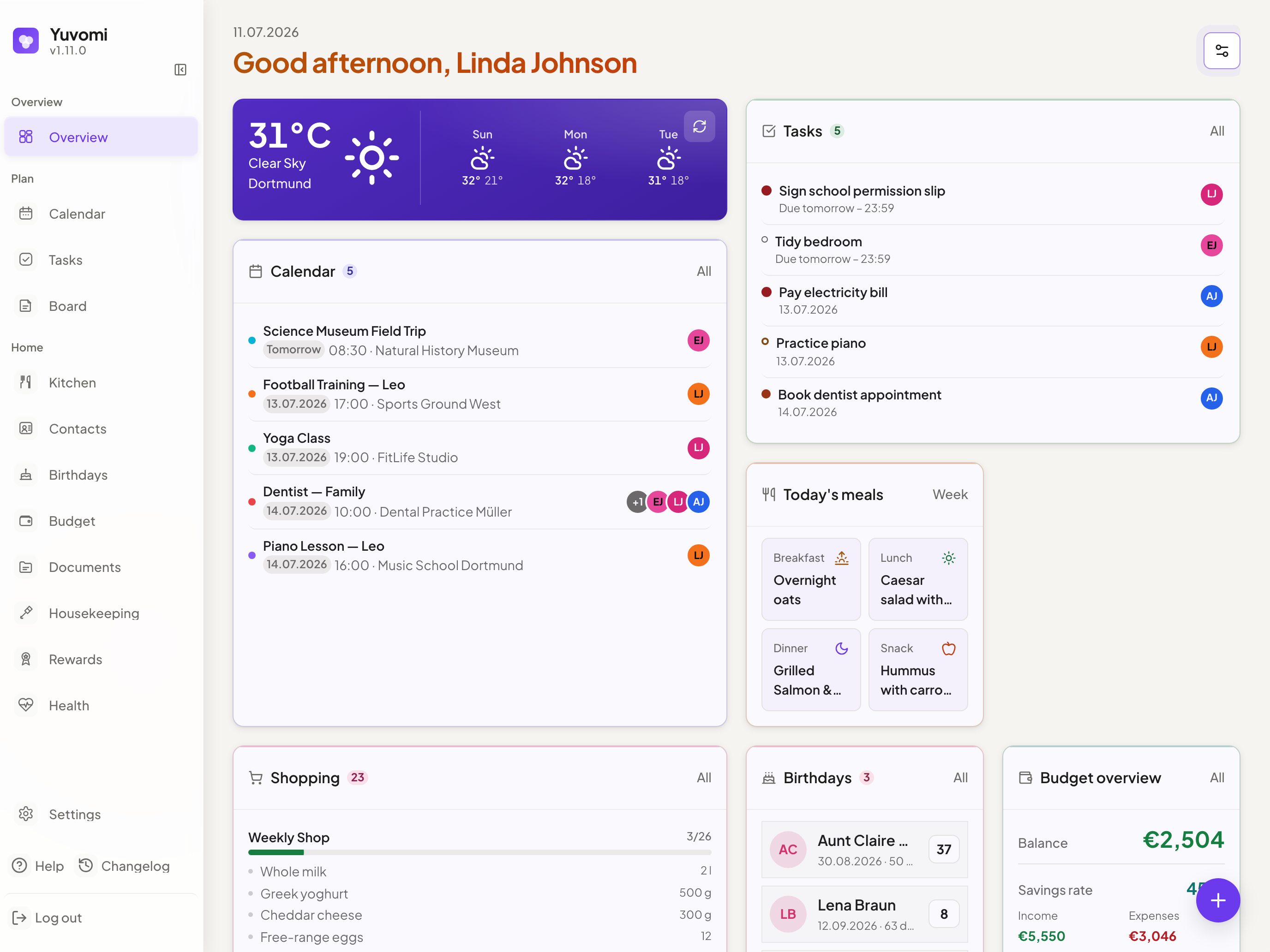
Today’s high and low on the weather card (#851). The card carried a temperature span for every forecast day and, for today, only the momentary reading - the one day you can actually still plan around was the one without a range. It now sits under the current temperature in the same vocabulary as the row below it, on the card and on the wall tablet.
Open-Meteo only. The legacy OpenWeatherMap provider has no daily aggregate to give: its three-hour list starts at the next step, so by the afternoon today’s bucket is missing the morning and its maximum can fall below the current reading standing right beside it. A range that is sometimes a range is worse than none.